WHEN ALGORITHMS MEET EMOTIONS: TOWARD AI-SUPPORTED CULTURALLY RESPONSIVE AND EQUITABLE EDUCATION
Synopsis
The rapid integration of artificial intelligence (AI) into educational systems has transformed decision-making processes, assessment practices, and student monitoring mechanisms. However, most AI-driven applications in education remain primarily performance-oriented, prioritizing predictive accuracy over contextual sensitivity and ethical responsibility. This chapter introduces the concept of Culturally Intelligent AI in Education (CIE-AI) as a theoretically grounded and normatively driven framework that integrates cultural responsiveness, student motivation, psychological well-being, and algorithmic fairness into the design of educational AI systems. Drawing upon culturally responsive pedagogy, self-determination theory, multilevel modeling, and fairness-aware machine learning, the chapter argues that AI systems must move beyond neutral predictive tools toward human-centered decision-support architectures. The proposed model consists of four interconnected layers: contextual awareness, emotional-motivational monitoring, fairness auditing, and intervention-oriented policy integration. By embedding cultural context and equity principles into algorithmic design, CIE-AI seeks to prevent the reproduction of structural inequalities while enhancing student engagement and well-being. The chapter concludes by outlining a research and policy agenda aimed at advancing ethically responsible, culturally adaptive, and developmentally supportive AI applications in education. This paradigm shift—from performance optimization to equity-oriented intelligence—represents not merely a technical adjustment but an epistemological reorientation of educational data science.
Pages
1-22
Published
1 May 2026
Categories
Copyright (c) 2026 Vera Academic Press

How to Cite
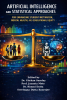
SARIDAS, G. (2026). WHEN ALGORITHMS MEET EMOTIONS: TOWARD AI-SUPPORTED CULTURALLY RESPONSIVE AND EQUITABLE EDUCATION. In ARTIFICIAL INTELLIGENCE AND STATISTICAL APPROACHES FOR ENHANCING STUDENT MOTIVATION, MENTAL HEALTH, AND EDUCATIONAL EQUITY (pp. 1-22). Vera Academic Press. https://doi.org/10.64782/vera.vap220