TEACHING MARY WOLLSTONECRAFT THROUGH ARTIFICIAL INTELLIGENCE: RETHINKING LITERATURE IN THE DIGITAL AGE
Synopsis
Mary Wollstonecraft’s contribution to both literature and education is seminal, particularly through her work A Vindication of the Rights of Woman (1792), which advocated women’s equality and intellectual development. Nevertheless, historical contexts and linguistic complexities of 18th century texts can be challenging to contemporary students. In the present age of digitalization, Artificial Intelligence (AI) can present innovative pedagogical opportunities which can reimagine the instructional patterns. This chapter delves into examining how AI can assist in developing educational tools which can enhance teaching literary concepts, strengthening textual understanding and improve students’ attentiveness. This chapter will also delve into analyzing how Natural Language Processing (NLP) and Automated Text Analysis, AI based platforms can help learners understand literature, combining digital humanities and AI assisted teaching. In this chapter, we will try to analyse how AI can help understand Wollstonecraft’s arguments through AI-assisted interpretative learning.
Pages
59-70
Published
1 May 2026
Categories
Copyright (c) 2026 Vera Academic Press

How to Cite
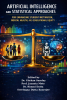
Das, U. (2026). TEACHING MARY WOLLSTONECRAFT THROUGH ARTIFICIAL INTELLIGENCE: RETHINKING LITERATURE IN THE DIGITAL AGE. In ARTIFICIAL INTELLIGENCE AND STATISTICAL APPROACHES FOR ENHANCING STUDENT MOTIVATION, MENTAL HEALTH, AND EDUCATIONAL EQUITY (pp. 59-70). Vera Academic Press. https://doi.org/10.64782/vera.vap28