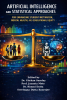
ARTIFICIAL INTELLIGENCE AND STATISTICAL APPROACHES FOR ENHANCING STUDENT MOTIVATION, MENTAL HEALTH, AND EDUCATIONAL EQUITY
Keywords:
ARTIFICIAL INTELLIGENCE, STATISTICAL APPROACHES, ENHANCING STUDENT MOTIVATION, MENTAL HEALTH, EDUCATIONAL EQUITYSynopsis
This edited volume, “Artificial Intelligence and Statistical Approaches for Enhancing Student Motivation, Mental Health, and Educational Equity”, makes a significant and timely contribution to contemporary educational discourse by bringing together scholars from different institutions and disciplinary backgrounds to examine how artificial intelligence, data analytics, and statistical methods may be applied to improve educational processes and learner outcomes. Rather than treating artificial intelligence as a purely technical instrument, the volume adopts a broader educational perspective in which technology is considered in relation to student motivation, emotional wellbeing, fairness, inclusion, classroom practice, institutional preparedness, and social responsibility. The chapters address several pressing concerns in present day education, including the need to make algorithmic systems culturally responsive and ethically accountable, the role of explainable artificial intelligence in supporting learning in areas such as medical statistics, the possibilities of collaboration between teachers and generative artificial intelligence within blended pedagogy, the transformation of literature teaching and digital classrooms, and the use of early warning systems to identify learners at risk before disengagement becomes more severe. At the same time, the book remains grounded in the practical conditions of educational systems by engaging with issues such as teacher preparedness, statistical literacy, inequalities in digital infrastructure, and the wider institutional requirements for responsible technology adoption in schools and higher education. A major strength of the volume lies in its refusal to regard academic achievement as an isolated educational outcome. Instead, it consistently emphasizes that meaningful education must attend to the learner as a whole person whose performance is shaped by psychological wellbeing, a sense of belonging, motivation, access, and socio-cultural context. In doing so, the book moves beyond uncritical enthusiasm for technological innovation and offers a balanced scholarly perspective that recognizes both the promise and the limitations of artificial intelligence in education. It raises important ethical concerns, including algorithmic bias, privacy, transparency, and equity, while also showing how statistical approaches can contribute not only to measurement and prediction but also to more just and inclusive educational planning. Collectively, the contributors argue that the future of education will depend not on replacing teachers with machines, but on developing thoughtful relationships between human judgment and technological support in ways that strengthen pedagogy, critical reflection, and inclusive development. The range of the volume is also noteworthy, extending from school education to higher education, from classroom practice to policy concerns, and from conceptual discussion to applied educational research. For this reason, the book will be of value to teacher educators, researchers, policy makers, postgraduate students, and others interested in the changing relationship between education, technology, and social equity. Overall, the volume stands as an important scholarly contribution to understanding educational change in an age shaped by artificial intelligence, while persuasively maintaining that innovation must remain connected to human values, ethical responsibility, and the democratic promise of educational opportunity for all.
Chapters
-
Intro
-
WHEN ALGORITHMS MEET EMOTIONS: TOWARD AI-SUPPORTED CULTURALLY RESPONSIVE AND EQUITABLE EDUCATION
-
EXPLAINABLE ARTIFICIAL INTELLIGENCE IN EVIDENCE BASED MEDICAL STATISTICS EDUCATION
-
BLENDED PEDAGOGY 4.0: HUMAN TEACHERS AND GENERATİVE AI İN THE CLASSROOM
-
TEACHING MARY WOLLSTONECRAFT THROUGH ARTIFICIAL INTELLIGENCE: RETHINKING LITERATURE IN THE DIGITAL AGE
-
EARLY WARNİNG SYSTEMS FOR IDENTİFYİNG AT-RİSK LEARNERS İN INDİA: A QUALİTATİVE STUDY
-
TEACHER PREPAREDNESS AND STATISTICAL LITERACY FOR AI INTEGRATION IN EDUCATION
-
AN EMPIRICAL STUDY OF EQUITY AND ETHICS IN RELATION TO SOCIAL RESPONSIBILITY AMONG B.ED. TRAINEES
-
GENERATİVE AI (GENAI) İN SCİENCE EDUCATİON AS AN INNOVATİVE PRACTİCE: A SYSTEMATİC REVİEW
-
ROLE OF ARTİFİCİAL INTELLİGENCE İN ENHANCİNG MOTİVATİON AMONG STUDENTS İN DİGİTAL CLASSROOMS
-
QUANTIFYING DIGITAL INFRASTRUCTURE INEQUALITY IN INDIAN GOVERNMENT SCHOOLS: A COMPOSITE INDEX AND CLUSTER-BASED APPROACH
-
ROLE OF EDUCATİON İN SUPPORTİNG STUDENT MENTAL HEALTH AND WELL BEİNG AMONG HİGHER EDUCATİON STUDENTS
-
IMPACT OF MENTAL HEALTH TOWARDS STUDY HABIT ON ACADEMIC ACHIEVEMENTS OF SECONDARY SCHOOL STUDENTS
-
EMERGENT İNNOVATİVE APPROACHES İN MODERN EDUCATİON: THE ROLE OF ARTİFİCİAL INTELLİGENCE
-
INSTITUTIONAL READINESS FOR AI ADOPTION IN EDUCATION IN WEST BENGAL
-
INTELLIGENT TUTORING SYSTEMS FOR ENHANCING ACADEMIC PERFORMANCE OF SECONDARY STUDENTS IN INDIA
-
Bibliography
Downloads
Download data is not yet available.
References
Chapter references listed at the end of the chapter.
Published
1 May 2026
Categories
Copyright (c) 2026 Vera Academic Press
License

This work is licensed under a Creative Commons Attribution 4.0 International License.
All works published by Vera Academic Press are licensed under the Creative Commons Attribution (CC BY) license.
This license permits use, distribution, reproduction, adaptation, and commercial reuse of the work in any medium or format, provided that appropriate credit is given to the original author(s) and the source.
Full license details are available at: https://creativecommons.org/licenses/by/4.0/
Details about the available publication format: Full Book
Full Book
ISBN-13 (15)
978-625-00-4089-8
How to Cite
ARTIFICIAL INTELLIGENCE AND STATISTICAL APPROACHES FOR ENHANCING STUDENT MOTIVATION, MENTAL HEALTH, AND EDUCATIONAL EQUITY. (2026). Vera Academic Press. https://doi.org/10.64782/vera.vap2